
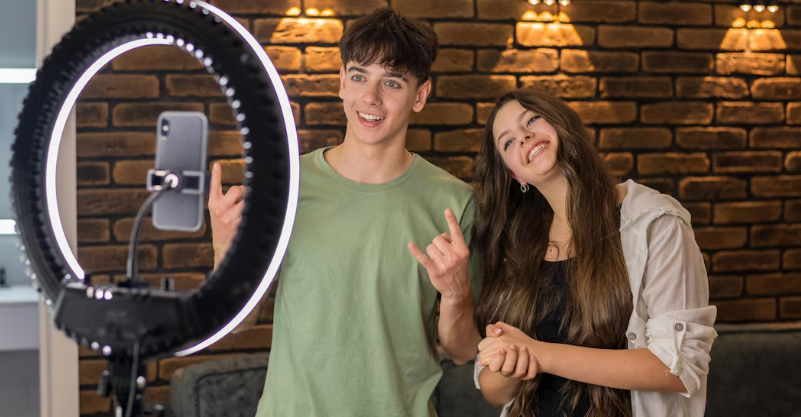
A queue forms outside a studio that doesn’t resemble a typical Hollywood set on a muggy afternoon in Los Angeles. Actors are not hurried into trailers by casting assistants or velvet ropes. Rather, a group of young admirers refreshes a livestream countdown while standing on the sidewalk with phones. A creator is going to begin broadcasting to millions of people inside.
There used to be only one direction for entertainment. content created by studios. Viewers observed. Celebrities appeared in magazines or on late-night television, but they were kept at a comfortable distance. The relationship now appears to be more participatory and chaotic. Influencers react instantly, fans leave comments in real time, and the performance never truly ends.
| Category | Details |
|---|---|
| Industry Focus | Digital entertainment and influencer economy |
| Major Platforms | YouTube, TikTok, Instagram, Twitch |
| Traditional Entertainment Hub | Hollywood |
| Notable Influencer-Creator | MrBeast |
| Major Pop-Culture Influencer | Addison Rae |
| Virtual Influencer Example | Tilly Norwood |
| Industry Shift | Creator-led production and interactive entertainment |
| Estimated Market | Influencer economy worth tens of billions globally |
| Audience Trend | Interactive livestreams, fan communities, creator-driven content |
| Reference Website | https://www.youtube.com |
Consider MrBeast, who transformed YouTube challenges into something more akin to big-budget productions. His videos frequently feature lavish sets, hundreds of competitors, and prize money comparable to that of traditional television game shows. It is evident that the distinction between influencer and studio has already become hazy when one of his productions is put together—a warehouse full of cameras, crew members pacing around enormous obstacle courses.
Creators who consistently post on platforms like YouTube and TikTok are rewarded for both influencing and responding to trends. A unique kind of celebrity—part performer, part producer, part community manager—is fostered by the system. A creator might film in the morning, edit in the afternoon, and respond to thousands of comments in the evening. The speed is draining. However, it is effective.
Studios have started hiring influencers directly after realizing how devoted these audiences are. The red carpets that were previously only used by actors and directors are now used by some creators. Photographers yell their names at premieres with the same fervor once reserved for Oscar winners. The hierarchy of fame seems to have subtly changed.
Hollywood executives may have viewed influencers as curiosities a few years ago; they might have been useful for marketing, but they weren’t considered serious entertainment figures. That mistrust has diminished. Studios recognize something valuable when a creator shows up with twenty million followers already invested in their work: built-in audiences. It’s the kind of dependability that Hollywood hardly ever gets.
The rise of celebrities like Addison Rae, who transitioned from short dance videos to music, movie roles, and brand collaborations, illustrates how ephemeral contemporary fame has become. Agents, auditions, and studio support were once necessary for the route. These days, it sometimes starts with a smart idea and a phone camera.
It’s unclear if that change democratizes entertainment or just swaps out one gatekeeper for another.
The addition of virtual personalities makes the transformation even more bizarre. Even though they only work with software, digital influencers like Tilly Norwood have started to gain enormous fan bases. Like any other celebrity update, their posts—fashion shoots, lifestyle updates, and brand endorsements—appear on social media.
The disturbing aspect is that viewers appear at ease with it. AI celebrities, according to some detractors, have the potential to dilute human creativity and transform entertainment into a factory of algorithmically optimized personalities. Conversely, some think that artificial characters could enhance narrative in ways that conventional actors are unable to.
It’s difficult to ignore how quickly the industry changes when attention is involved as these discussions take place.
In the meantime, the dynamic between audiences and creators continues to change. Fans can subscribe to exclusive channels, give direct tips to creators, and even have an impact on the broadcast on livestream platforms like Twitch. The performer starts to resemble the host of an ongoing conversation rather than a far-off star.
The outcome feels disorganized, spontaneous, and occasionally chaotic. Maybe, though, that unpredictability is precisely the point.
It’s hard to look around contemporary entertainment venues without feeling that the rules have changed, whether it’s a TikTok creator house humming with cameras or a Twitch studio glowing with LED lights. Momentum, genuineness, and continuous visibility are now key components of fame. That reality doesn’t seem to sit well with everyone in Hollywood.
For a single project, traditional actors prepare for months in the hopes that the finished movie will be a hit. Influencers, on the other hand, use daily metrics like views, likes, comments, and shares to gauge their success. It’s a rhythm that prioritizes flexibility and quickness over accuracy.
The system as a whole seems to be learning to move more quickly. The future is still unknown, though. Audiences are infamously erratic, and social media platforms change rapidly. When trends shift in the future, the creator who controls the algorithm today might face difficulties.
One thing, though, seems more and more obvious. Hollywood sound stages are no longer the only venues for entertainment.
It occurs on phones, in livestreams, and in comment sections, among other places. Furthermore, the famous influencers spearheading that change are no longer awaiting approval.
