

You’ll see them before you realize what they are if you drive past the cornfields outside of New Albany, Ohio. Surrounded by chain-link fencing and the constant hum of cooling units, these long, low buildings are the color of cement and are lit by sodium lamps even at noon. The locals refer to them as “the boxes.” They are referred to as the future by Wall Street. Something more intriguing than software is loaded onto the trucks that come and go carrying steel girders and transformers.
Investors believe that the obvious AI trade has already been completed. Microsoft, Nvidia, and the usual suspects. However, a different kind of winner is quietly emerging in the margins of earnings calls and brokerage notes. In the sense that most people use the term, these are not tech companies. They sell cooling fluid, concrete, copper, switchgear, pipes, and turbines. A software founder would scoff at their unglamorous names and dividend yields.
| Category | Detail |
|---|---|
| Industry | Artificial Intelligence Infrastructure & Data Centers |
| Estimated New Power Demand by 2030 | 75 to 100 gigawatts |
| 2025 Hyperscaler Capex (Microsoft, Alphabet, Meta, Amazon combined) | Roughly $370 billion |
| Annual Spending on Data Center Construction | Over $50 billion and rising |
| Projects Delayed or Canceled by Local Opposition | $64 billion (per Data Center Watch) |
| Largest Quarterly Spender | Microsoft, nearly $35 billion in one quarter |
| Notable Public AI Infrastructure Stocks | Iren (NASDAQ: IREN), Terawulf (NASDAQ: WULF) |
| Expected U.S. Natural Gas Production Increase | 10% to 20% by 2030 |
| Long-Term Energy Mix | Nuclear, solar, gas |
| Productivity Upside Estimate | $10 trillion in additional cumulative U.S. GDP by 2035 |
When you look at the numbers, it’s difficult to ignore the change. In a single quarter, Microsoft alone spent nearly $35 billion on data centers and associated infrastructure. The four largest hyperscalers’ combined capital expenditures are expected to reach about $370 billion this year, and their executives consistently predict that next year will be even higher. There must be a destination for that money. The majority of it doesn’t wind up in another tech stock. It ultimately covers the cost of steel, transformers, gas turbines, and installation labor.
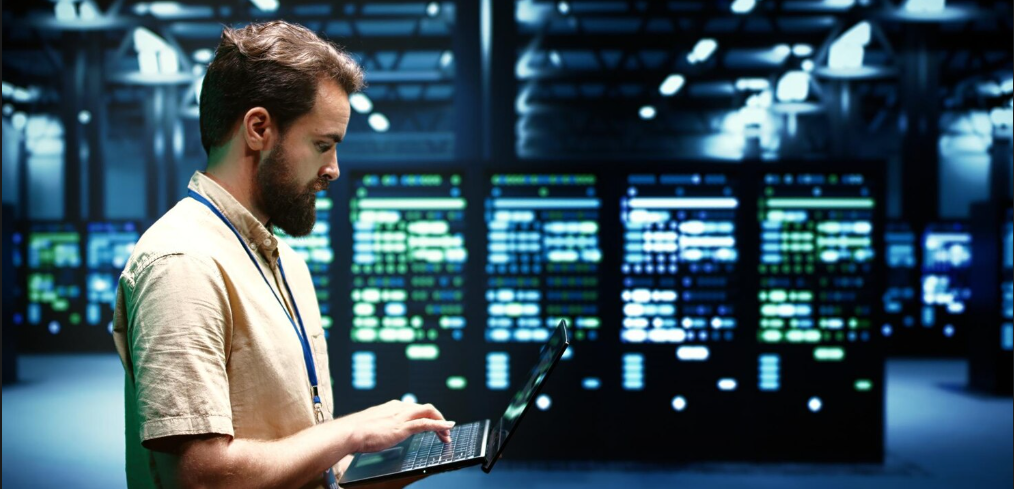
The element that consistently surprises people is the energy component. By 2030, industry analysts predict that AI digital demand will necessitate the construction of between 75 and 100 gigawatts of new power generation, the majority of which will come from burning natural gas due to engineering necessity.
Suddenly, American gas producers, pipeline operators, midstream businesses, and the dull middle of the energy chain are selling into a demand curve that no one could have predicted five years ago. Years ago, Tesla had similar concerns about the viability of its wager. The gas guys didn’t even place a wager. They simply continued to drill.
Then there are the smaller companies that co-locate with data centers or construct generation capacity on-site. Businesses that began in cryptocurrency mining, such as Terawulf and Iren, have moved into AI infrastructure with a kind of opportunism that seems very 2026. They have a straightforward advantage. They already own the land, the substations, and the power agreements. It’s becoming more difficult to build new ones. Shots were fired at the residence of an Indianapolis councilman due to a vote on a data center. After approving a $6 billion project, a small Missouri town dismissed half of its city council. Although it doesn’t stop construction, that type of activism slows it down, which increases the value of every site that is already under control.
Investors seem to think that equipment manufacturers also profit. The manufacturers of the massive cooling towers, medium-voltage switchgear, HVAC experts, and suppliers of electrical gear are all quietly operating multi-year backlogs. Their order books resemble those of defense contractors rather than commercial vendors. It has an almost antiquated quality. In the end, the AI revolution still requires people wearing steel-toed boots to weld steel beams.
Whether this rotation has fully priced in is still unknown. Yes, utility stocks and a few pipeline names have changed. However, AI is still viewed as a software story in the wider market. You get the impression that Wall Street is still catching up to a fairly obvious reality as you watch this develop. In this gold rush, the picks-and-shovels trade isn’t selling chips. Selling everything else that keeps the chips running is what it does.
