

Watching central bank governors and finance ministers fly into Washington for their yearly meetings while oil prices surpass $107 per barrel and the Strait of Hormuz closes behind them is almost unsettling. The typical murmur of bilateral meetings and briefing papers fills the hallways of the IMF and World Bank buildings, but this year there’s a distinct undertone.
After the pandemic and Russia’s invasion of Ukraine, a third significant economic shock is currently underway, and it’s possible that the international financial establishment is still not giving it the attention it merits.
| Topic Overview: Middle East Conflict & Global Economic Impact | |
|---|---|
| Conflict Start Date | February 28, 2025 (US and Israeli strikes against Iran) |
| Key Institutions Responding | International Monetary Fund (IMF), World Bank |
| World Bank Growth Forecast (2026) | 3.65% baseline; as low as 2.6% in prolonged conflict scenario |
| Inflation Forecast (Emerging Markets, 2026) | 4.9% baseline; up to 6.7% worst-case |
| People at Risk of Food Insecurity | ~45 million additional people |
| Oil Price (Brent Crude, at time of reporting) | $107.72/barrel (June contract); $115.17/barrel (May contract) |
| Emergency Support Expected (IMF) | $20 billion to $50 billion near-term |
| World Bank Crisis Mobilization | $25 billion near-term; up to $70 billion within six months |
| Countries in or Near Debt Distress | ~50% of low-income countries (up from 25% pre-COVID) |
| Key Chokepoint | Strait of Hormuz — closed by Iran, causing largest oil market disruption in history |
| World Bank President | Ajay Banga |
| Most Vulnerable Region | Asia and low-income developing nations |
Even seasoned economists did not fully account for the impact of the conflict, which started on February 28 with US and Israeli strikes against Iran. The Strait of Hormuz was closed. The International Energy Agency claims that the closure of one of the most important energy chokepoints in the world by Iran has caused the biggest disruption to the world’s oil market in recorded history. You could hear the word “crisis” being used repeatedly in various languages while standing outside a shipping logistics office in Singapore.
The World Bank and the IMF were actually getting ready to update their projections for global growth prior to the start of the war. Many were taken aback by how resilient the world economy was despite the burden of tariffs imposed during the Trump administration. The kind of cautious optimism that economists permit themselves when the data cooperates was present.
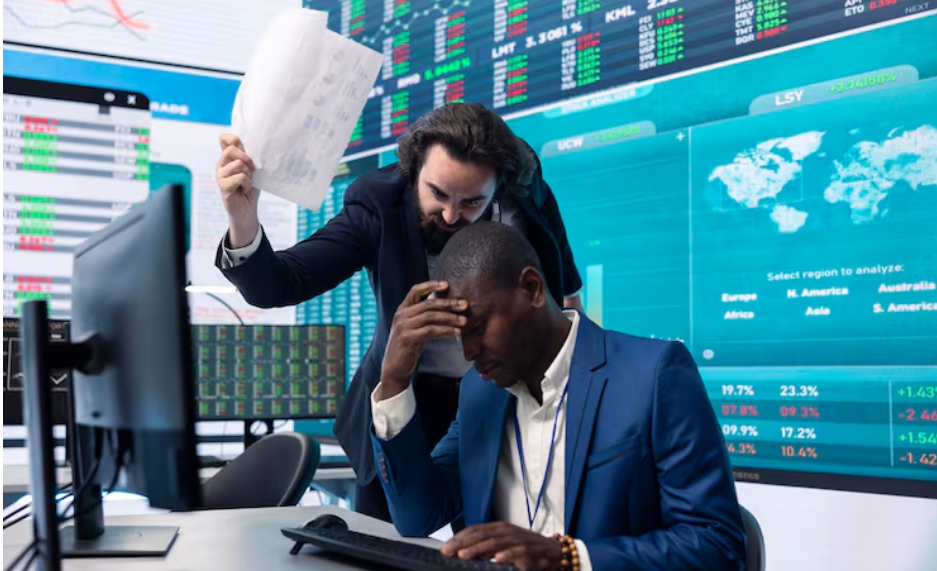
That optimism is now somewhere in a drawer. The World Bank has lowered its growth forecast for emerging markets and developing economies from 4% in October to 3.65% for 2026, and it cautions that if the conflict continues, it may drop to 2.6%. In those same countries, inflation is now predicted to reach 4.9%, with a worst-case scenario of 6.7%. These are not minor changes.
The compounding is what makes this moment so unnerving. Low-income nations were not in a strong position going into this crisis. According to Eric Pelofsky of the Rockefeller Foundation, these nations were already spending twice as much on debt repayment in 2025 as they had before the COVID-19 pandemic, leaving virtually nothing for basic infrastructure, hospitals, or schools.
Of them, half are in debt distress or very close to it. This vulnerability was not caused by the Middle East conflict, but it is definitely being exploited. Countries that were barely hanging on are now being pulled under.
The food aspect runs the risk of being overlooked in favor of oil-related news. The IMF has cautioned that if the conflict continues to impede fertilizer shipments, an additional 45 million people may experience severe food insecurity. Fertilizer is not a glamorous product.
In contrast to crude futures, it does not influence market movements. However, without it, harvests decline, and when harvests decline in nations that are already overburdened, the effects are tangible. Before anyone in Washington began rescheduling meetings, these children were going hungry in areas that were already struggling.
Asia is particularly anxious about all of this. Speaking from Singapore, Kpler President Jean Maynier was remarkably straightforward about it: the continent just lacks sufficient domestic energy resources to fill the void left by interrupted Gulf supplies.
“It will not be enough in China; it will not be enough to cover in big countries like the Philippines or Indonesia,” he stated. A person hedging for a press release would not make such a statement. That person is genuinely concerned and spends their entire day reading shipping data.
Coordinated response is more difficult than necessary due to the geopolitical context. The G20, which is supposed to be the platform for major economies to coordinate their responses to crises, is broken. South Africa is not allowed to participate in the rotating presidency, which is held by the United States. China and Russia are still members.
“You’re trying to operate on consensus when there’s no consensus in the world right now on anything,” said Josh Lipsky of the Atlantic Council, describing the situation with a kind of weary clarity. It’s difficult to ignore how much the architecture of international cooperation, which was meticulously constructed over many years, is being strained by the weight of contemporary politics.
The World Bank and IMF can send out signals, and they are doing so loudly. $20 billion to $50 billion in emergency assistance is being prepared for the most vulnerable nations. According to the World Bank, it can swiftly raise $25 billion and up to $70 billion in just six months. These are substantial figures. However, economists like former US Treasury employee Mary Svenstrup are calling for any new assistance to be linked to real reform rather than just debt that keeps piling up.
“We can’t ask them to sacrifice growth and development for the sake of rebuilding buffers,” she stated. In that sentence, there is a genuine conflict between what struggling populations can truly endure and what institutions desire as conditions.
The more general question is whether the world’s economic institutions were created for a time like this. No one in a ministerial briefing room will quite say this aloud. In five years, three significant shocks. Keep track of debt. A broken G20. One contract for oil at $115 per barrel.
It was stated quite succinctly by the IMF’s own economists: “All roads lead to higher prices and slower growth.” That forecast does not come with a lot of cautions. That’s an institution telling you what it knows to be true in the hopes that the listeners will at last take it seriously.
