

The journey to Abilene, Texas, seems incomplete. The horizon is broken by cranes rather than buildings, dust hangs in the air, and trucks pass in long lines. The speed at which emptiness is transformed into something dense, humming, and costly is difficult to ignore. Data centers are growing somewhere behind the fences; they resemble industrial organisms rather than offices, stealthily consuming space and power.
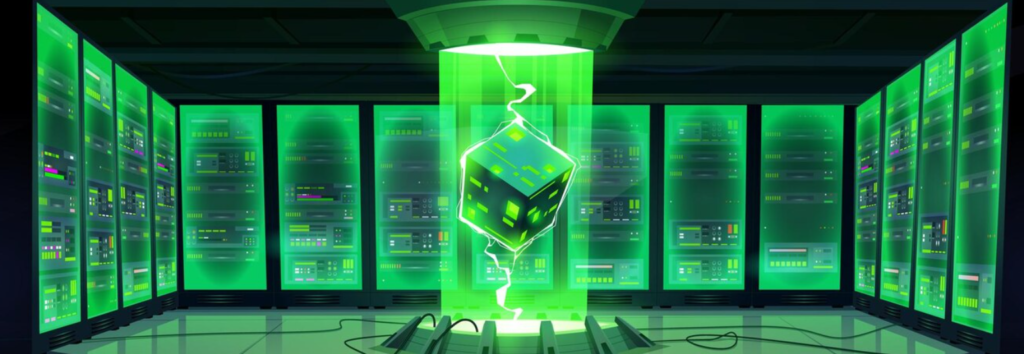
Investors were fixated on chips a few years ago, pursuing firms like Nvidia as though silicon itself were the big deal. That story is changing. There is a feeling that the actual scarcity was never processing power on its own, but rather the infrastructure supporting it, the electricity supplying it, and the actual ground beneath it. As I watch this develop, it seems more like a land rush than a tech boom.
| Category | Details |
|---|---|
| Industry Focus | Data Centers & Real Estate Investment Trusts (REITs) |
| Key Player | Equinix |
| Market Size | Over $10B annual revenue (Equinix guidance) |
| Business Model | Leasing data center infrastructure (recurring revenue) |
| Key Drivers | AI growth, cloud computing, data explosion |
| Major Clients | Enterprises, cloud firms, Fortune 500 companies |
| Notable Trend | Hyperscale AI campuses expanding globally |
| Investment Appeal | Stable income + long-term growth |
| Core Constraint | Power availability and land access |
| Reference | https://www.equinix.com |
At first glance, companies like Equinix don’t appear glamorous. They run 280 buildings around the world that are crammed with cables, cooling systems, and machine racks. However, there is a quiet, potent activity taking place inside those walls. They rent access rather than selling hardware. recurring income. steady cash flow. It’s steady in a way that investors seem to be rediscovering, but it’s not as thrilling as startups.
The surroundings are strangely ordinary outside one of these establishments. A low building with no windows. gates for security. The sound of generators. However, on the inside, businesses like Amazon and Microsoft are essentially managing segments of the digital economy. It’s possible that the simplicity—nothing ostentatious, just infrastructure operating minute by minute—is part of its allure.
The economics are beginning to appear almost antiquated. REITs are constructing something more akin to a utility model rather than wagering on rapid expansion. For example, Equinix distributes a sizable amount of its cash flow as dividends. In the tech industry, where profits are frequently reinvested indefinitely, that is unusual. Despite AI’s volatility, investors seem to think it still requires a solid physical foundation, and they are prepared to pay for that dependability.
However, there are concerns about the size of what is being constructed. Projects associated with OpenAI and its partners, such as Oracle and SoftBank, span a region in West Texas that was formerly mostly covered by scrub and wind. Before the sun rises, thousands of workers arrive, kicking up dust that gets on everything, including the inside of your throat, machinery, and boots. Although the buildings rising suggest permanence, it feels transient.
A mid-sized city’s worth of electricity can be consumed by each of these campuses. The tension starts to manifest at that point. There is land available. For now, capital is plentiful. However, it is more difficult to secure power—reliable, scalable power. It’s still unclear if grids can keep up with this rate or if some projects will stall due to a shortage of electrons rather than a lack of funding.
It’s also hard to ignore the financial echo. These developments are driven by enormous borrowing, which strains credit markets and raises risk indicators. In private, some analysts liken it to the early 2000s fiber-optic boom, another instance in which infrastructure outpaced immediate demand. The fact that AI workloads already exist might be the difference. Even so, the speed is unnerving.
The classification controversy is still going strong in the investment community. Are data centers real estate, similar to shopping centers and office buildings? Or are they infrastructure, more like power plants and highways? Both appear to be the answer, and part of their appeal is that ambiguity. They serve a purpose so vital that it verges on utility, but they provide rental income similar to that of real estate.
The noise never stops as you pass one of these facilities at dusk. The building has a mechanical sense of life, with cooling systems cycling and lights flickering behind reinforced walls. It’s difficult to ignore how invisible all of this is to the typical user who is streaming a video or sending a message. AI’s weight, heat, and space appetite are all hidden aspects of its physical reality.
However, the money is concentrated in that hidden layer. Once thought of as conservative investments, REITs are now at the core of the AI economy. Not ostentatious. Not revolutionary. Just essential.
This transition from silicon to soil is perceived as still being undervalued. Investors realized they needed foundations after chasing speed. It remains to be seen if this land grab is excessive or sustainable. For now, however, the dust continues to rise, the cranes continue to move, and the silent landlords of the digital age continue to collect rent.
